Two sellers list nearly identical homes in Crestwood the same month. Same decade of construction, same square footage, same subdivision era. One sells in three weeks with a clean closing. The other loses eleven days to a re-negotiation after the buyer's inspector finds something the seller never mentioned, not because the seller lied, but because the seller never looked. The difference between those two outcomes usually comes down to two things: a pipe nobody checked and a gas nobody tested for.
If you're preparing to sell a home in Crestwood, these are the two findings that show up on inspection reports again and again, and the reason they show up has less to do with bad luck than with how Kentucky's disclosure law is written.
The Two Things Crestwood Inspectors Keep Finding
Crestwood grew up in waves, with a meaningful share of its housing stock built during the 1970s through 1990s subdivision boom, in neighborhoods like Hunters Hollow and the older sections off Crestwood Road and KY-393. Homes from that era were commonly plumbed with a mix of galvanized steel, copper, and early-generation plastic supply lines rather than a single consistent material throughout.
That mixed plumbing is one of the two recurring findings. The other is radon, a naturally occurring gas that has nothing to do with the age of a house and everything to do with the ground it sits on.
Neither of these is a dealbreaker on its own. What makes them worth planning for is that both are the kind of thing a seller can genuinely not know about until someone tests for it, and Kentucky's disclosure law treats "I didn't know" as a legitimate answer. That's the mechanism worth understanding before you list.
Why the Pipe Looks Fine Until It Doesn't
Galvanized steel pipe corrodes from the inside out. A line can sit in a basement or crawl space looking completely intact, holding its shape at every joint, while the interior diameter has narrowed from rust buildup called tuberculation. The pipe isn't leaking. It's choking.
The first sign homeowners usually notice isn't a wet spot on the ceiling. It's weak water pressure upstairs, or pressure that drops when two fixtures run at once. By the time a joint actually weeps or splits, what looked like routine maintenance has become an emergency repair.
This is exactly why it shows up so often on Crestwood inspection reports. A home built in the 1980s with copper added during a later kitchen renovation can still have original galvanized branch lines feeding the upstairs bathroom, hidden inside finished walls that nobody has opened since. The inspector runs a pressure test, checks for rust staining at unions, and finds the gap between how the plumbing looks and how it performs.
None of this means the pipe has to come out before you list. It means you should know what's back there before a buyer's inspector tells you, because a partial repipe negotiated calmly before an offer is a very different conversation than one negotiated under a five-day inspection deadline.
What Kentucky Law Actually Requires You to Say
Kentucky sellers of residential property are required by statute, KRS 324.360, to complete a written disclosure using a form created by the Kentucky Real Estate Commission, the Seller's Disclosure of Property Condition. That form covers roughly a dozen categories, including structural components, roof, plumbing, electrical, heating and cooling, water and sewer, and a specific section on hazardous conditions that asks directly about radon testing and any mitigation system.
The standard behind the form is knowledge, not investigation. Kentucky law does not require a seller to hire an inspector or dig up defects they are genuinely unaware of, but it does not let a seller ignore something obvious and later claim ignorance. If a Crestwood home has never been tested for radon, the honest answer on the form is that it hasn't been tested, and that answer satisfies the statute.
It just doesn't satisfy the buyer's inspector, who will very likely test anyway during the option period. At that point the seller is no longer filling out a form. They're reacting to a number on a report, in the middle of a transaction, with a closing date already on the calendar.
The Numbers That Change the Conversation
Radon potential varies house to house even on the same street, which is part of why it catches sellers by surprise. Statewide, roughly 42 percent of Kentucky homes test above the EPA's action level of 4.0 picocuries per liter, and that share climbs past 60 percent in parts of Jefferson County. Mitigation, when it's needed, typically runs $800 to $1,000 for a professionally installed system.
Those are manageable numbers when a seller controls the timing. A pre-listing test costs little and takes only a few days to return results. If mitigation turns out to be necessary, it can be scheduled on the seller's calendar and priced into the listing conversation from the start, or simply completed before showings begin.
The same logic applies to the plumbing question. A licensed plumber can typically confirm supply line material at the point where the main enters the house in under an hour. Knowing the material and getting a rough repair estimate before listing means a seller walks into any negotiation already holding the number, instead of hearing it for the first time from a buyer's contractor with an incentive to estimate high.
Crestwood's Terrain Adds a Third Line Item
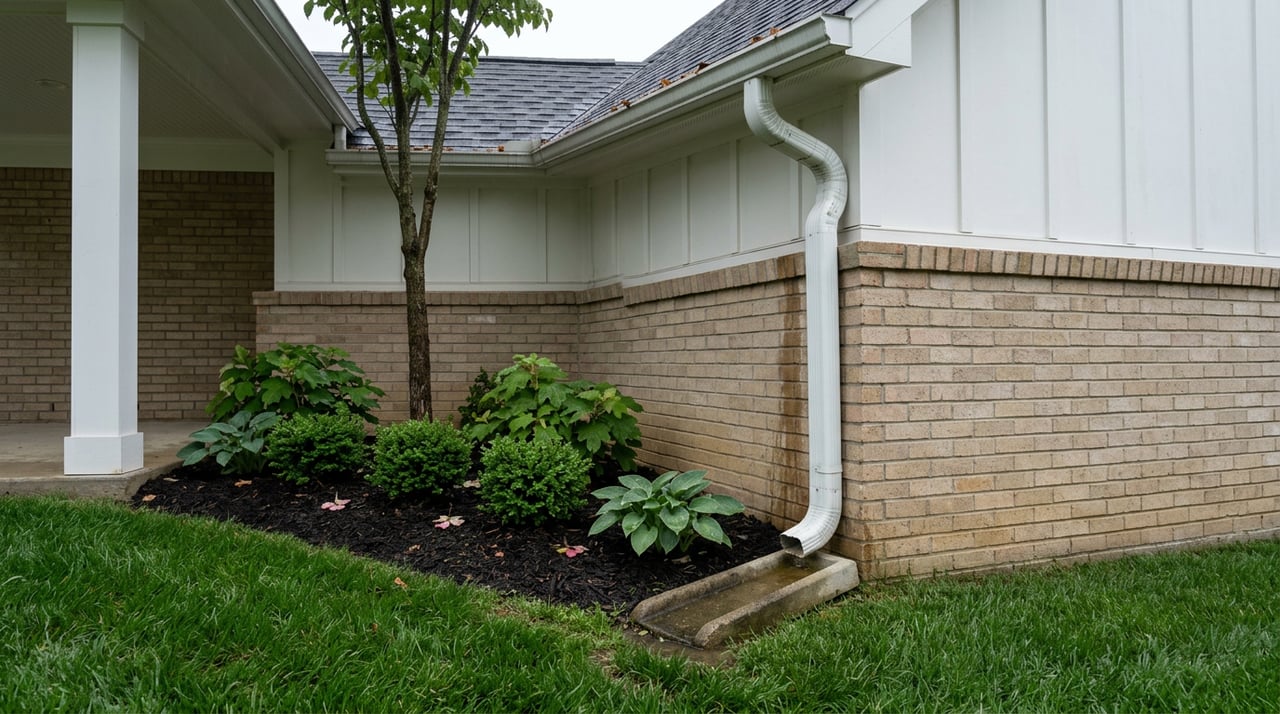
Crestwood's rolling terrain and seasonal rainfall create their own recurring inspection finding: improper grading around foundations that lets water pool near basements or crawl spaces, particularly in older homes built before modern waterproofing standards became routine. It's a common enough finding that it's worth a walk around the foundation after a heavy rain before you list, checking for standing water near the base of the house or a downspout that dumps water right against the siding instead of carrying it away.
Homes near green spaces such as The Maples Park, the 22-acre park the city has owned and managed since purchasing it from the Fanelli family in 2005, or Peggy Baker Park off Abbott Lane, also tend to draw closer attention to pest activity during inspection, simply because of proximity to trees and open ground. It's rarely disqualifying. It's one more thing worth a look before a buyer's inspector finds it first.
The One Move That Changes Who Holds the Leverage
Here's the pattern underneath all three of these findings. Kentucky's disclosure standard is built around what a seller actually knows, which means a seller who tests nothing before listing is, technically, disclosing honestly by writing "unknown." But "unknown" doesn't stop a buyer's inspector from finding out anyway, and the moment that happens mid-contract is the worst possible time to discover a $900 radon system or a partial repipe, because now it's a negotiation instead of a decision.
Testing before you list flips that. A radon test, a five-minute check of the supply line material, and a walk around the foundation after rain turn three unknowns into three known quantities you control, on your timeline, before a single buyer walks through the door.
Crestwood's own infrastructure is a useful reminder of how much this kind of local detail matters. Water inside city limits comes from Louisville Water Company, and sewer service runs through the Metropolitan Sewer District, billed together on one statement, according to the city's own contact page. Larger Crestwood lots outside that infrastructure sometimes still rely on private septic systems that need their own maintenance schedule. Knowing which one applies to your specific address, and what condition it's in, is exactly the kind of thing worth confirming before it becomes a line item on someone else's inspection report.
A Few Questions Crestwood Sellers Ask Before Listing
Do I have to test for radon before I sell? Kentucky law doesn't require a test. It requires you to disclose the results if you have them. Many Crestwood sellers test anyway, simply because it removes the uncertainty before a buyer's inspector introduces it on their own timeline.
My home still has some galvanized pipe. Do I need to replace all of it before listing? Not necessarily. What matters is knowing where it is and roughly what a repair would cost, so you can make an informed choice about whether to fix it now, disclose it clearly, or price it into the conversation.
How do I find out if my Crestwood address is on city sewer or a private septic system? The City of Crestwood's water and sewer information is listed on its official contacts page, and a licensed septic contractor can confirm the details for any private system on a larger lot.
Selling a home in Crestwood well isn't about hiding what an older subdivision naturally comes with. It's about knowing what your specific house is going to reveal before someone else finds it for you. If you're thinking about listing and want a clear read on what your home's specific age, lot, and location are likely to surface, Dee Amber Homes can walk the property with you and help you get ahead of it. Request a complimentary home valuation to start that conversation before your calendar does.