Dreaming about more land, a barn, or space for horses in Oldham County? It is easy to picture the lifestyle, but acreage and equestrian properties come with a different set of rules, costs, and planning steps than a typical neighborhood home. If you want to buy or sell this kind of property with confidence, it helps to understand how Oldham County handles land use, permits, utilities, and horse-friendly features. Let’s dive in.
Why acreage fits Oldham County
Oldham County has long been associated with a rural character that includes horse farms alongside established residential areas. The county sits about 20 miles northeast of Louisville, and that mix of accessibility and open land helps explain why acreage properties remain appealing to buyers who want more space.
That rural identity is backed by real numbers. The USDA’s 2022 Census of Agriculture counted 410 farms in Oldham County, covering 55,910 acres in farms, with an average farm size of 136 acres. Oldham County Planning & Development also states that its long-range planning is designed to balance growth with rural roots and greenspace preservation.
What makes acreage living different
Acreage living in Oldham County is not simply subdivision living on a bigger lot. The county’s AG-1 Agricultural/Residential District is intended to support agriculture and limit urban-style development until urban services can be provided efficiently. That means the land-use framework is built around lower-density living, open space, and agricultural use.
For you as a buyer or seller, that distinction matters. A property may offer privacy, flexibility, and room to grow, but it may also come with added reviews, approvals, and maintenance responsibilities that are less common in a traditional neighborhood setting.
What equestrian properties usually include
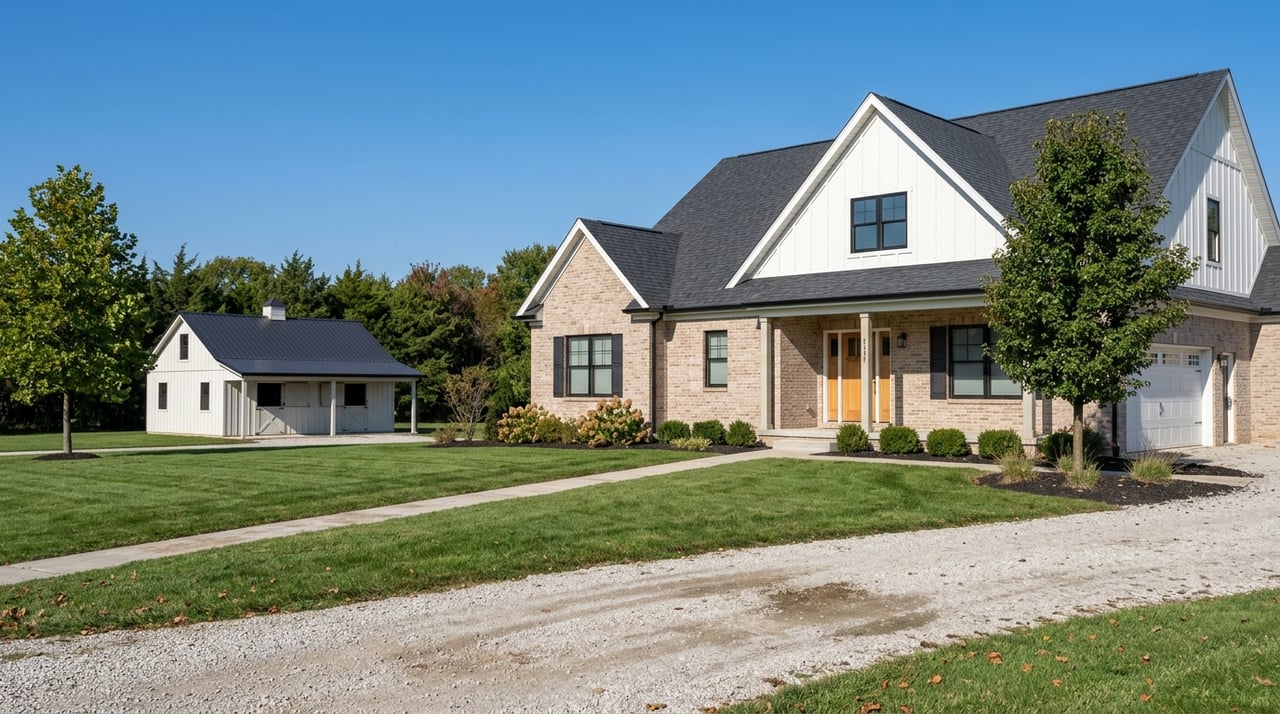
Horse-friendly and acreage properties in Oldham County often include more than the main home. You may see barns, pole barns, sheds, storage buildings, fenced pasture, driveways that extend far off the road, and open areas intended for agricultural or recreational use.
County rules help shape how those features are placed and used. Oldham County requires accessory structures to remain subordinate to the principal structure, and they cannot be located between the house and the front property line. Side and rear setbacks also apply, which affects where a barn, shed, or similar building can go.
The county’s building-permit materials specifically include forms and diagrams for pole barns. That is a practical sign that these structures are common in rural property projects, but it does not mean they are automatic. Buyers should still verify what is already permitted and what future improvements may require.
How zoning affects horse properties
Zoning is one of the first things to check when you are looking at acreage or equestrian real estate. In Oldham County’s AG-1 district, permitted uses include agricultural uses, riding academies and stables, and single-family detached homes. That creates a solid foundation for many horse-friendly residential properties.
At the same time, not every equestrian-related use is permitted by right. The zoning ordinance lists some uses as conditional, including veterinary hospitals and kennels, farm implement repair, livestock arenas, and certain recreational or hospitality uses. So if your plans go beyond private residential use, zoning review becomes even more important.
Private use versus business use
This is where many buyers need clarity. A property may work well for keeping your own horses, but that does not automatically mean it is ready for lessons, boarding, events, or another commercial activity.
If you are buying with a business plan in mind, you should confirm the parcel’s zoning and any approval requirements before moving forward. The same issue can matter for sellers, because a property’s value and buyer pool may depend in part on what uses are actually allowed.
How much land you may need for horses
One of the most common questions is how many acres are enough. University of Kentucky Extension offers a practical rule of thumb: 2 acres per mature horse and 1 acre per pony or yearling. That gives you a starting point, but acreage alone does not tell the full story.
Pasture quality and management matter just as much. Extension guidance notes that quality pasture can provide much of a horse’s maintenance or light-work nutrition, and it emphasizes rotation on small acreage, avoiding overstocking, and managing stalls and manure carefully.
Why management matters as much as acreage
Horse property upkeep goes well beyond mowing grass. You need to think about pasture health, stocking density, manure handling, and parasite control to keep the land usable over time.
That is why two seemingly similar properties can function very differently in real life. A parcel with usable pasture and a manageable layout may support your goals much better than one with more raw acreage but weaker land conditions.
Utilities and infrastructure to verify
With acreage properties, utilities should never be treated as a small detail. You should confirm whether the property uses public water and sewer or relies on a private well and onsite sewage system.
If the property has a private well, Kentucky recommends annual water testing. The state also says well construction, modification, and abandonment must be performed by a Kentucky-certified well driller.
If the property uses onsite sewage, Kentucky’s onsite wastewater program requires local health-department site evaluation and inspection. Installation must be completed by a certified onsite septic installer, unless a homeowner receives a homeowner permit through the local health department to self-install.
Why this matters during due diligence
For acreage buyers, water and wastewater verification should be a first-order due diligence step. A beautiful setting and attractive home features do not replace the need to understand how the property functions day to day.
For sellers, clear information about the property’s well, septic, and related approvals can make the listing process smoother. Buyers tend to feel more confident when the basics of land use and infrastructure are well documented.
Permits, site plans, and stormwater review
Acreage properties often involve more review than buyers expect. Oldham County requires site-plan review for many land uses before building permits are issued, which means future improvements may involve more than a simple contractor quote.
The county also states that a Stormwater Quality Management and Erosion Control Permit may be required for residential, commercial, and industrial construction projects, with only a narrow exception for some very small residential lot projects that do not affect floodplain or waterways. If you plan to build, expand, or disturb land, that review may become part of the process.
Common improvements that may need review
Depending on the property, review may become relevant for:
- Barns and pole barns
- Outbuildings and sheds
- Land-disturbing work
- Driveway or access changes
- Utility extensions
- Drainage improvements
The key point is simple: do not assume you can add improvements immediately after closing without checking county requirements first.
Drainage, floodplain, and access issues
Drainage can have a major impact on how usable a property really is. Oldham County requires a local floodplain permit in addition to state permits, and the county engineer oversees floodplain management.
This becomes especially important if the parcel includes creek-adjacent land, low-lying areas, or any planned work near drainage paths. Floodplain status can influence both present use and future improvements.
Access is another detail that matters more on acreage than on a smaller lot. Oldham County states that work in the public right-of-way needs approval, and right-of-way width can vary depending on the age and type of road.
Why long driveways need extra attention
If a property has a long driveway, culvert, or planned utility extension, access approvals can become relevant quickly. What looks straightforward on a showing may require additional review once you begin planning changes.
That is one reason experienced local guidance matters with this type of purchase. The property is not just a home. It is a site with layers of physical and regulatory detail.
What buyers should evaluate first
When you tour acreage and equestrian properties in Oldham County, it helps to think beyond the house itself. Finishes, layout, and curb appeal still matter, but they are only part of the picture.
A smarter first review includes the property’s broader function and restrictions. Before treating a parcel as move-in ready for horses or future improvements, you should verify:
- Zoning and allowed uses
- Setbacks for barns and outbuildings
- Floodplain status
- Water source
- Septic or sewer setup
- Drainage conditions
- Access and right-of-way considerations
- Permit history or likely permit needs
What sellers should understand before listing
If you are selling an acreage or equestrian property, buyers are likely to ask more detailed questions than they would for a standard neighborhood home. They may want to understand the land’s use, utility setup, outbuildings, and whether the property supports private horse ownership or something more specialized.
That makes preparation especially important. Organized information about zoning, structures, utilities, and site features can help your property stand out and reduce uncertainty during negotiations.
A well-marketed acreage property also benefits from clear positioning. Some buyers are shopping for a private lifestyle property, while others are focused on horse use, land flexibility, or future improvements. Knowing how to present those strengths can make a meaningful difference.
Why local guidance matters
Acreage and equestrian real estate in Oldham County can be exciting, but it is rarely simple. These properties combine home buying with land use, county review, infrastructure questions, and long-term upkeep decisions.
If you are buying, the right guidance can help you evaluate whether a property truly fits your plans. If you are selling, strong preparation and strategic marketing can help you present the property clearly and attract serious buyers.
If you are thinking about buying or selling acreage or equestrian property in Oldham County, Dee Amber Anderson can help you navigate the details with a local, relationship-first approach.
FAQs
What is an acreage property in Oldham County?
- An acreage property in Oldham County is generally a home with a larger land component, often in a rural or agricultural setting where land use, outbuildings, and utility systems may differ from a typical subdivision property.
How many acres do you need for horses in Oldham County?
- A common University of Kentucky Extension rule of thumb is 2 acres per mature horse and 1 acre per pony or yearling, but pasture quality and management are also important.
Can you build a barn on acreage in Oldham County?
- Possibly, but Oldham County uses permit and site-plan review, and some projects may also require stormwater review depending on the scope and site conditions.
Are horse businesses automatically allowed on Oldham County properties?
- No. Some horse-related uses may be conditional rather than automatically permitted, so the parcel’s zoning should be checked before planning commercial activity.
Should buyers assume acreage properties in Oldham County have public utilities?
- No. Buyers should confirm whether a property uses public water and sewer or a private well and septic system because those systems are regulated differently.
Why does floodplain status matter for Oldham County acreage?
- Floodplain status can affect how land is used and improved, and Oldham County requires a local floodplain permit in addition to state permits for applicable work.